Padel Court Construction: Process, Timeline & What to Expect
A clear look at how a padel court is built — from first design through production, global shipping and turnkey installation. Written by the manufacturer that handles all four stages in-house, with courts installed in 30+ countries.
What Padel Court Construction Really Involves
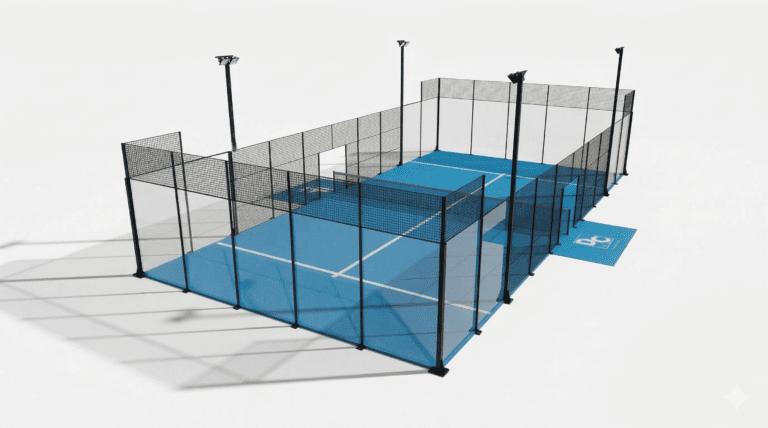
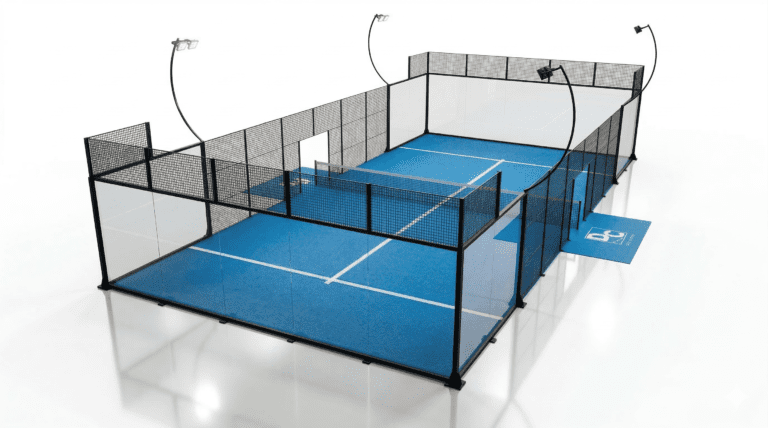
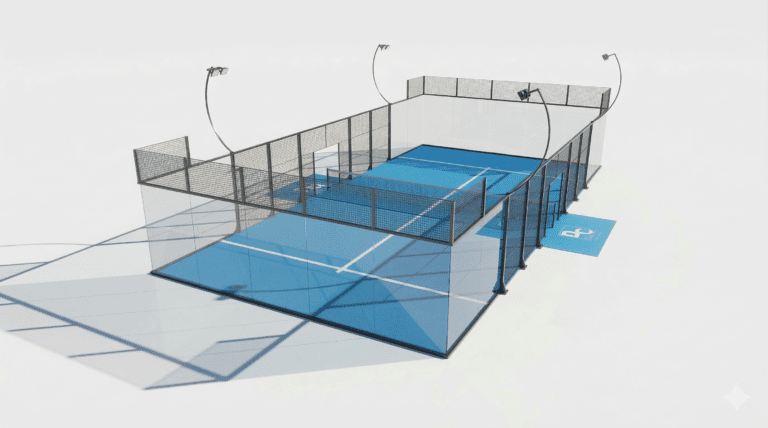
Building a padel court is more than laying turf. A finished court is a fully engineered system — a galvanised steel structure, tempered glass walls, a monofilament turf surface, lighting, and a net — all built to International Padel Federation (FIP) specifications and assembled on a prepared base.
If you are looking for padel court construction, the main structure and walls must come from one single manufacturer so everything fits perfectly and safely. Your only real choice is whether to buy that complete system through a reseller, or work directly with a padel court builder like Dream Courts, where we design, produce, and install it all for you.
Dream Courts handles padel court construction for clients in Australia and South-East Asia as core export markets, plus 30+ countries worldwide — design, manufacture, global shipping and turnkey on-site installation from a single manufacturer. See how we deliver to Australia and South-East Asia.
How a Padel Court Is Built: The 4-Stage Process
Every Dream Courts court moves through the same four stages, all handled in-house. That single chain of control is what keeps quality, timeline and accountability in one place.
- Step 1 — Design & consultation. We confirm the essentials before anything is manufactured: the court model, your available footprint, indoor or outdoor, colours, lighting and any canopy. A standard court needs a level, prepared base (typically concrete); we advise on the footprint and specification so the site is ready when the court arrives. This is also where you choose your model.
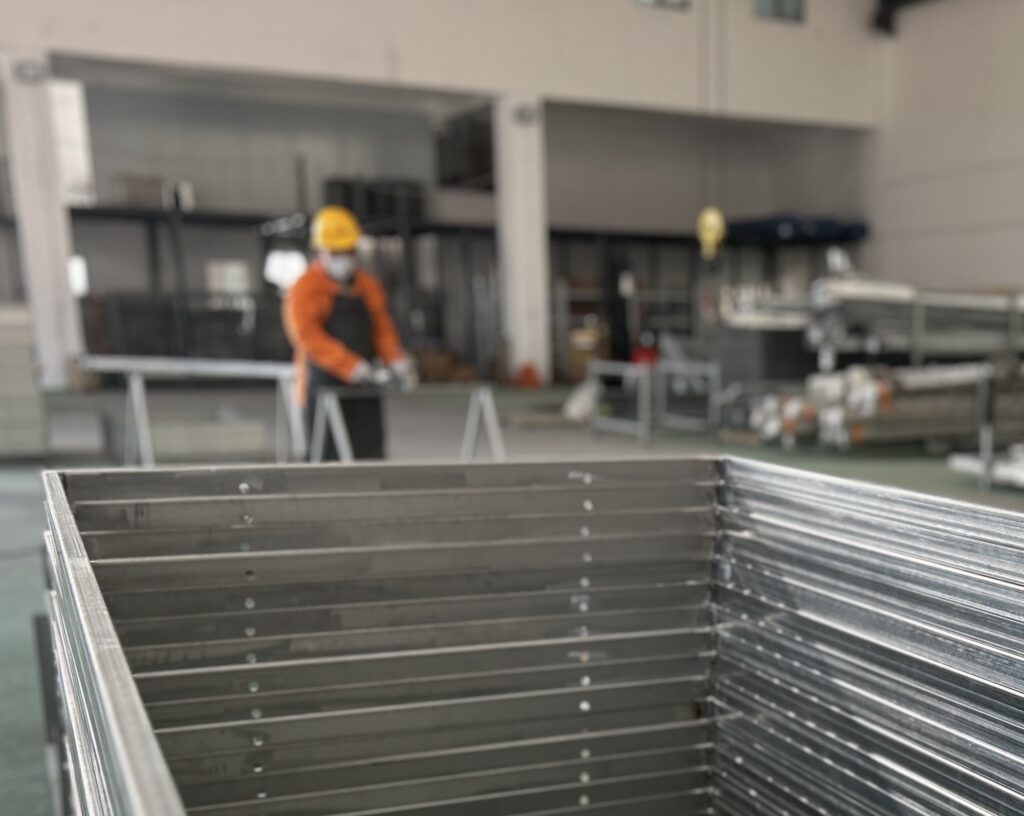
- Step 2 — Production. The court is manufactured under full in-house quality control: galvanised steel structure, CE/SGCC tempered glass, monofilament turf and FIP-compliant net. Spanish engineering with in-house production (10+ years) means the parts are made to spec and checked before they ship — not sourced piecemeal.
- Step 3 — Global logistics. The complete court is packed and shipped worldwide through our own logistics. Because the whole kit ships together from one source, there is one shipment to coordinate and one party responsible for it — not several suppliers to align.
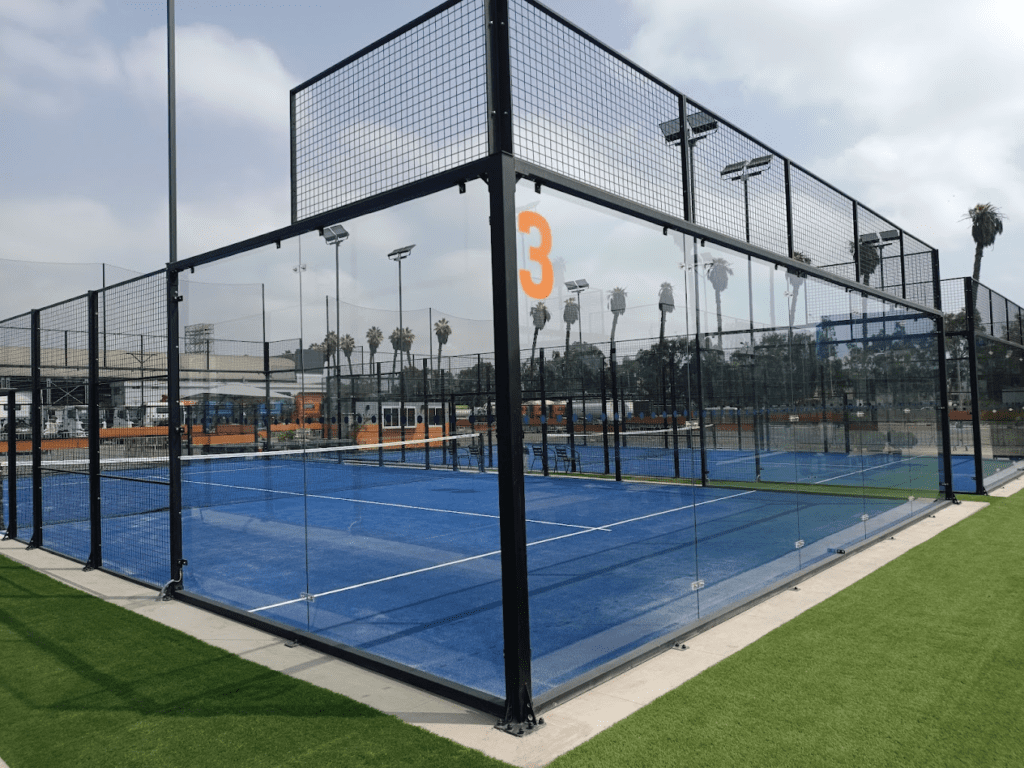
- Step 4 — Turnkey installation. Our team installs the court on site: structure, glass, turf, net, and lighting, ready to play. We hand it over ready to play.

Galvanised steel structure going up on site.
How Long Does Padel Court Construction Take?
From an agreed order, the average delivery time for a Dream Courts court is 30–60 days. That covers production and dispatch; on-site installation and your own base/groundwork run alongside or after delivery and depend on local conditions, site access and permits in your country.
A realistic way to plan it:
| Stage | What happens | Typical timing |
|---|---|---|
| Design & consultation | Confirm model, footprint, options | Before the order clock starts |
| Site preparation | Your level, prepared base (usually concrete) | Runs in parallel — depends on local contractor |
| Production & delivery | Manufacturing under quality control + global shipping | 30–60 days average |
| Installation | On-site assembly by our team, ready to play | After delivery; varies by site |
Total project time depends on shipping distance, customs, and how quickly your base is ready. The 30–60 days is the production-and-delivery average from our catalogue; ask us for a timeline specific to your location.
What Affects Padel Court Construction Cost
There is no single flat figure for padel court construction cost, because the investment depends on a handful of factors. The main ones:
- Court model — a classic court, a panoramic court and a full-panoramic court differ mainly in glass design.
- Number of courts — building several at once changes the per-court economics.
- Location — shipping distance, customs and local installation conditions.
- Site & base — the groundwork for your level concrete base is always a separate local cost.
- Options — lighting package, turf and structure colours, and whether you add a canopy for all-weather play.
Because these vary per project, courts are quoted per project — price on request. For a full breakdown of what goes into the number, see our padel court cost guide. Then contact us for an exact quote.
Choosing Your Padel Court Model
All three models share the same premium turf, steel and glass — the difference is the glass design and visibility, not the build quality.
DC-CLUB (DC-001) — classic court
The classic, most economical model. Easy to install and maintain, built to last. A common choice for first builds and multi-court roll-outs.
DC-VISTA (DC-010) — panoramic court
Our best-selling model, with panoramic side glass that gives good visibility for spectators, coaches and cameras — good value within the range. Read the full spec on the panoramic padel court page.
DC-TORNEO (DC-020) — full panoramic court
Full-panoramic design with maximum visibility from all sides, built to tournament / international level. For flagship venues and sanctioned events.
Plus, briefly: a portable padel court (drill-free install for pop-ups, events and tournaments) and a custom padel canopy to cover any model. See what is available on our padel courts for sale page.
Padel Court Materials & Specifications
Whichever model you build, the core engineering is the same. All specifications below are verbatim from our official 2026 catalogue, and every court is built to FIP specifications.
| Component | Specification |
|---|---|
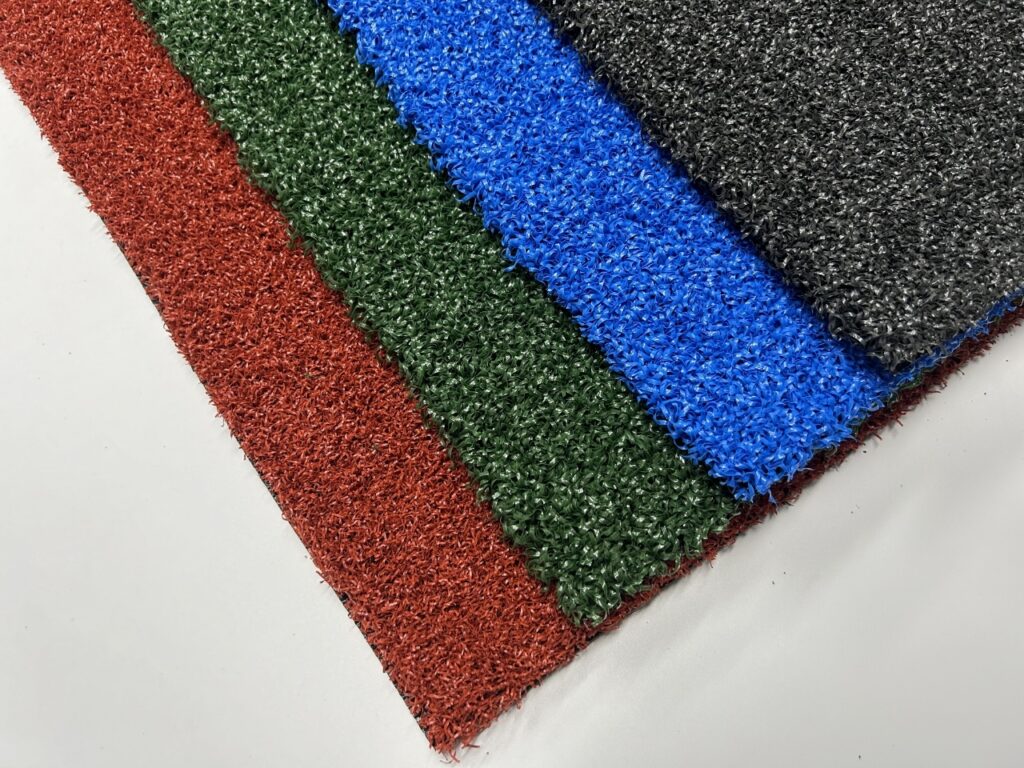
| Turf | 100% PE monofilament, KDK curly diamond fibre, 12 mm pile, 10,000 dtex, 50,400 stitches/m², double-layer PP + Grid PU backing, customisable colour with integrated white lines, 5 rolls per court, IBV tested |
| Metal structure | Hot-dip galvanised 3 mm steel (Q235B), electrostatic oven-cured powder coating, customisable colour, optional extra zinc for corrosive environments |
| Wire mesh | Hot-dip galvanised electro-welded 4 mm, 50 × 50 mm |
| Tempered glass | 12 mm, mechanised hole drilling, CE / SGCC certified, 2 × 3 m panels (18 pcs) |
| Padel net | FIP compliant, long service life, customisable |
| LED lighting | 8 × 200 W or 4 × 480 W, 200–800 lux, IP66 waterproof, CE / ROHS |
| Playing area | Standard 20 × 10 m — see our dimensions guide to plan your footprint |
| Standard | FIP compliant across every model |
Planning the space? Our padel court dimensions guide covers the exact footprint and run-off.
How to Choose a Padel Court Builder
The company you build with matters as much as the court. A few things worth checking before you sign with any padel court builder:
- Do they manufacture, or resell? Buying from the manufacturer means one point of accountability for quality, delivery and installation — no rebadging, no middleman.
- Are the courts built to FIP specifications? Every court should be built to International Padel Federation specifications so it is ready for club play and sanctioned competition.
- Can they show real installations? Ask for a track record. Dream Courts has courts in play across 30+ countries — see our projects.
- Is it genuinely turnkey? Make sure they actually handle the whole system so you aren’t left managing multiple suppliers.
Padel courts in play across 30+ countries — including Peru, South Africa, Mexico, Indonesia, Kenya, the Philippines, the Netherlands, Cyprus, Colombia and Sri Lanka.
Padel Court Construction — Common Questions
A padel court is built in four stages: design and consultation, production of the steel structure, glass, turf and net under quality control, global shipping, and turnkey on-site installation. With Dream Courts all four stages are handled in-house, so the court is delivered complete and built to FIP specifications.
Average delivery time is 30–60 days from an agreed order, covering production and dispatch. On-site installation and your own base preparation run alongside or after delivery and depend on your location, site access and local permits. Ask us for a timeline specific to your country.
Cost depends on the model, the number of courts, your location, your site/base and options such as lighting or a canopy, so courts are quoted per project. See our padel court cost guide for what drives the investment, then contact us at info@dream-courts.com for an exact quote.
Yes. A padel court needs a level, prepared base — typically concrete — ready before installation. We advise on the required footprint and specification during the design stage so your site is ready when the court arrives.
Yes. Every model is built to International Padel Federation (FIP) specifications, so it is ready for club play and sanctioned competition from day one.
Yes. We ship worldwide through our own logistics and provide turnkey on-site installation, with courts installed in 30+ countries and an average delivery time of 30–60 days.
Planning to Build a Padel Court?
Tell us your location, number of courts and preferred model, and we will prepare a tailored proposal — design, production, shipping and installation, handled from one place.